
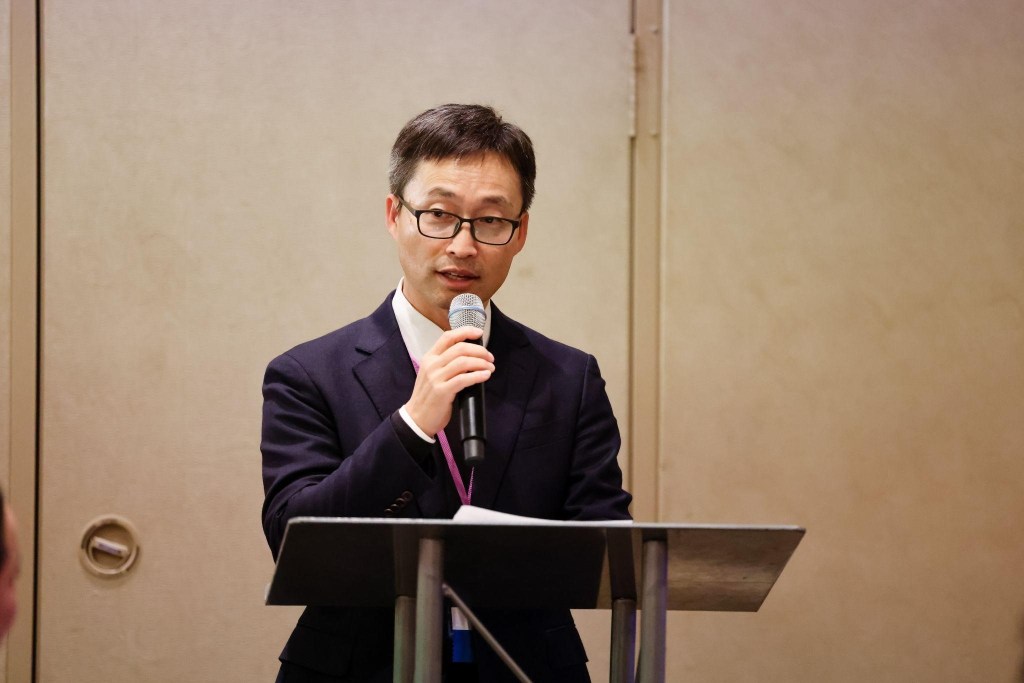
The Korean American Professional Association in Life Sciences (KAPAL) successfully held its 8th Annual Conference from November 1 to 2 in Gaithersburg, Maryland. This year’s conference served as an opportunity not only for research exchange but also for deepening understanding and discussions on key aspects of drug development, including regulatory issues, intellectual property, and investment. Over the course of the two-day event, around 200 researchers and industry professionals gathered to engage in in-depth discussions on the latest research and technological innovations in the life sciences and biohealth fields.
The opening ceremony featured Maryland Secretary of State Susan Lee and Montgomery County Executive Marc Elrich, who emphasized the importance of economic and scientific cooperation between Korea and the United States. Additionally, with support from the Korean Embassy in the U.S., the Korea Health Industry Development Institute (KHIDI), and the Korea Trade-Investment Promotion Agency (KOTRA), the need for closer collaboration between the two nations in health science and technology was once again underscored. Such support and participation strengthened KAPAL’s mission and provided a valuable opportunity to promote innovative research and cooperation between Korean and American life scientists.
This 8th KAPAL Annual Conference was co-hosted by the Korea Innovation Center (KIC-DC), the Korean-American Scientists and Engineers Association Washington DC Metro Chapter (KSEA-DC), and the Korean Life Science Association of Maryland (KLAM), bringing together experts from industry and academia for networking and exchange. Covering all stages from drug discovery to commercialization, the conference enabled participants to comprehensively discuss the various fields required at each stage of drug development.
Dr. Jihoon Park, President of KAPAL, stated, “This annual event is highly meaningful as it allows experts from diverse fields in the drug development process to come together and discuss multifaceted challenges. KAPAL will continue to make every effort to advance life sciences collaboration between Korea and the United States.” This year’s KAPAL Annual Conference not only provided academic and practical insights to attendees but also served as an essential platform for expanding networks and nurturing the next generation of leaders. KAPAL plans to continue offering a range of opportunities for Korean life scientists to grow and collaborate together. Please visit KAPAL’s website for further information (www.kapal.org).



 KSEA e-Letters