
March 28–30, 2025 | Harrah’s Las Vegas | Hosted by KSEA
The Korean-American Scientists and Engineers Association (KSEA) successfully hosted the second annual IMPACTs Conference from March 28 to 30, 2025, in Las Vegas, Nevada. With the theme “AI Empowered: Transforming Careers Through Technology,” the conference convened 126 professionals, speakers, and organizers for a weekend of skill-building, connection, and inspiration.
Chaired by Kevin Kim, IMPACTs 2025 delivered a thoughtfully curated program designed to equip early- and mid-career Korean-American professionals with the tools to thrive in a rapidly evolving workplace. This year’s theme reflected the growing influence of artificial intelligence across industries—from engineering and healthcare to finance and infrastructure—and aimed to help participants not only understand AI, but also harness it responsibly and strategically.
The weekend began with a relaxed pre-conference networking session on Friday evening, where 30–40 attendees gathered in an informal setting to make early connections. This warm and welcoming start fostered a collegial spirit that would carry throughout the entire event.
Saturday morning opened with a 2.5-hour AI Skill Workshop that served as both a technical primer and an icebreaker. The workshop featured two interactive modules: Prompt Engineering and Fraud Detection. In the Prompt Engineering segment, participants explored how to craft effective prompts for generative AI models like ChatGPT, examining the structure, logic, and iteration strategies behind high-quality outputs. The Fraud Detection segment shifted focus to the ethical challenges of emerging AI tools. Participants engaged in a quiz-style exercise to distinguish between real and synthetic images, prompting reflection on deepfakes, media verification, and trust in digital content. These sessions were designed not only to inform but to stimulate discussion and collaboration, with attendees often referencing the workshop throughout the day.
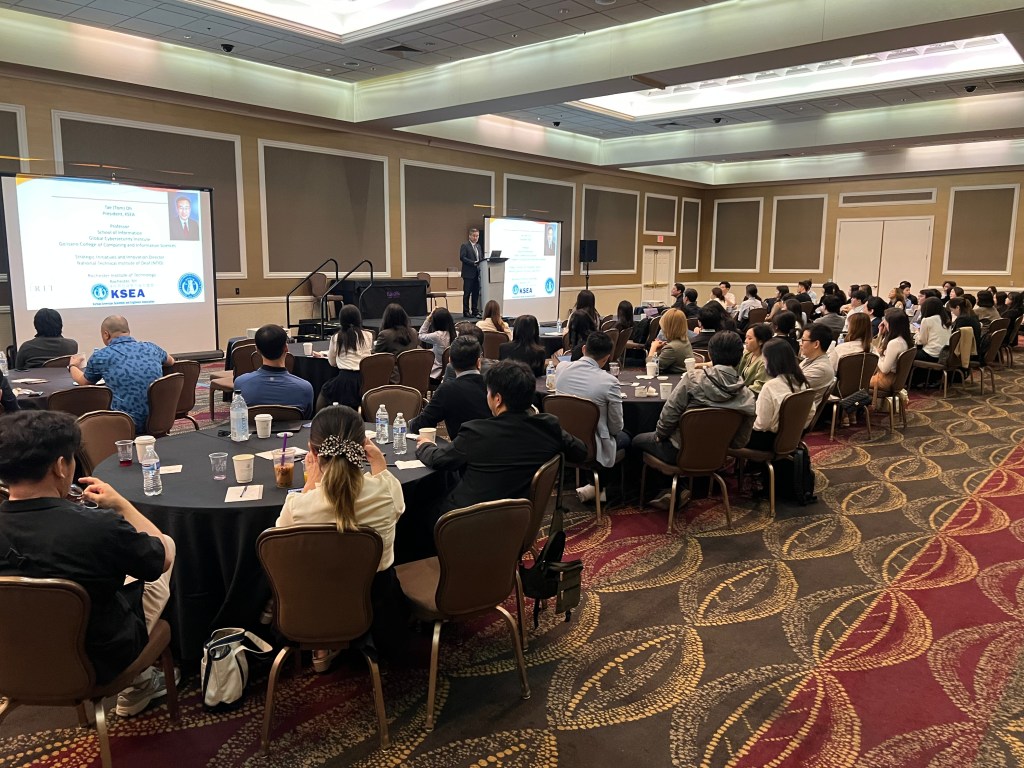

The afternoon featured three concurrent panel discussions, each offering industry-specific insights into AI adoption and impact. One session, titled “Advancing AI,” brought together researchers and developers to discuss large language models and interpretability. Another, “AI in Action,” highlighted how AI tools are being used to enhance productivity and decision-making in the workplace, with speakers sharing real-world applications from companies like Tesla and REV Renewables. A third panel, “Building the Backbone,” examined how enterprises scale AI initiatives, with panelists from Morgan Stanley, Merck, and others discussing governance, infrastructure, and deployment strategies. Each session concluded with open Q&A, providing attendees the opportunity to engage directly with speakers.
Among the most memorable elements of the conference was the Workplace Challenges Roundtable. Structured into two 30-minute sessions, the roundtable connected participants through small-group discussions on topics ranging from career transitions and workplace dynamics to AI applications and entrepreneurship. The format promoted open dialogue and practical peer-to-peer learning, allowing attendees to exchange experiences and leave with tangible strategies to apply in their careers.
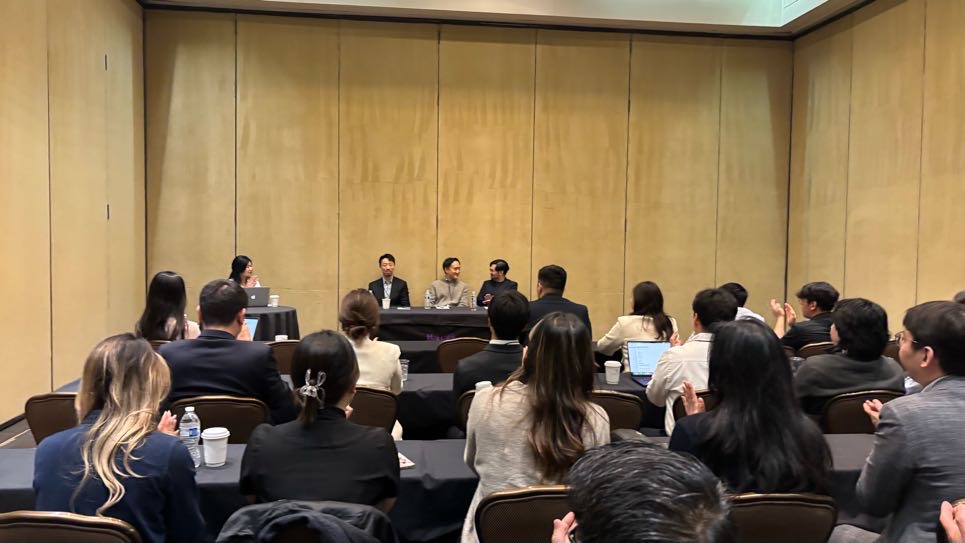

The evening continued with two keynote presentations. Daniel S. Lee, CFA, CFP, offered timely advice on managing personal finances in the age of AI. Drawing from his experience in fintech and wealth management, he explored how AI tools are transforming budgeting, investing, and financial planning. Later, John Lee, a technology architect specializing in trustworthy AI, delivered a powerful closing address on privacy, safety, and ethical responsibility in AI deployment. His talk underscored the need for transparency and accountability, reminding attendees of their role in shaping inclusive and responsible tech systems.
The conference concluded on Sunday morning with a casual post-event networking session, giving participants a chance to reflect on the weekend’s lessons, continue conversations, and exchange contact information for future collaboration.
The success of IMPACTs 2025 was made possible thanks to the dedication of the organizing team and the generous support of sponsors including KUSCO, OKA, Friends of Ygnite, B-Bridge, Prompt Factory, and the 53rd KSEA Administration. Their contributions helped subsidize travel, meals, and venue costs, making the event accessible to a broad audience.
Looking ahead, the organizers plan to expand IMPACTs’ reach, diversify its speaker base, and further integrate the program with other KSEA initiatives to build a sustainable leadership pipeline. The conference’s continued growth will depend on sustained administrative support and multi-year funding to meet the evolving needs of Korean-American professionals in STEM and beyond.
The IMPACTs 2025 Organizing Team was led by Kevin Kim (Chair), with Ryan Shin (Vice Chair), Lee Joon Kim, Yoo Jin Hwang, Yoona Park, JooHee Kim, and Jeongyoon Lee.
 KSEA e-Letters